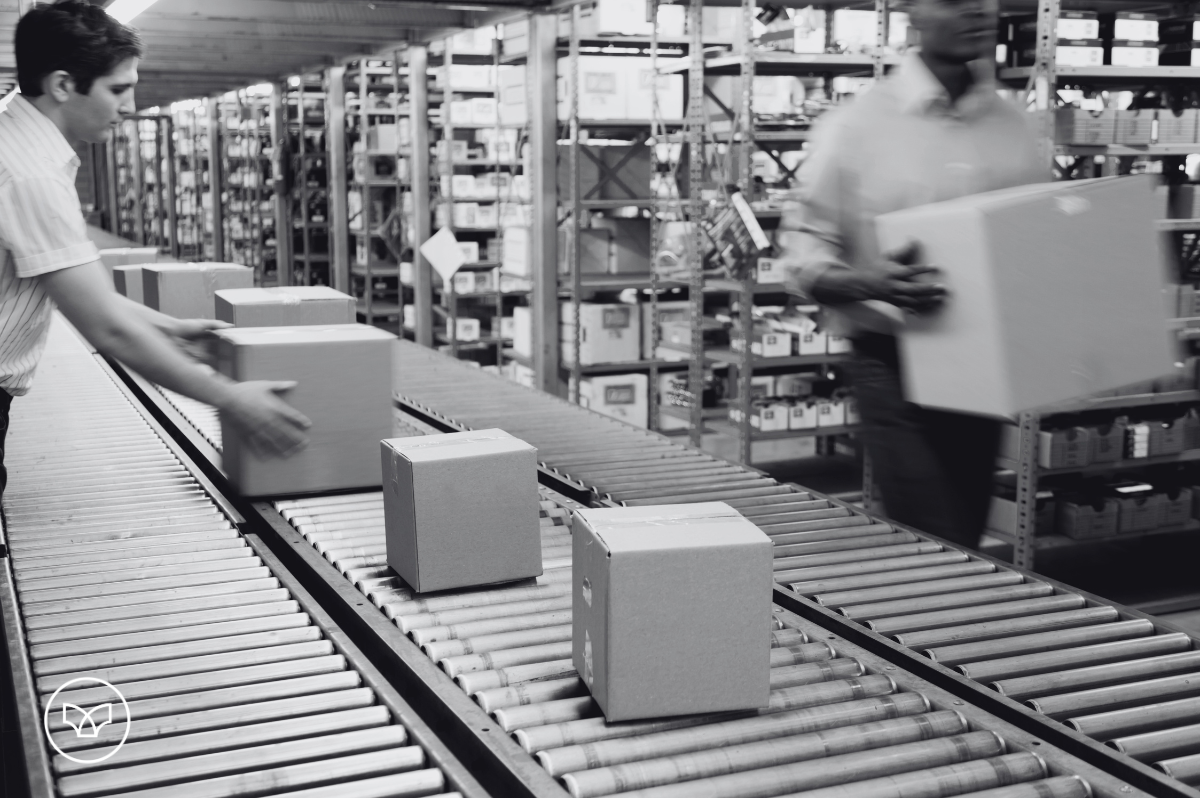

Peak season changes the economics of warehouse downtime. An outage during a quiet period is disruptive. The same outage during a holiday shipping cutoff, major promotion, or seasonal volume surge can affect thousands of orders within hours.
Labor keeps accruing. Automation sits idle. Carrier cutoffs get closer. Backlogs grow, and the warehouse may spend several shifts catching up after systems return.
For 3PLs, the impact can extend beyond one facility or one difficult day. Missed service levels can affect customer relationships, contract renewals, and the ability to win future business.
That is why peak planning cannot stop with labor, inventory, equipment, and carrier capacity. It must also address the architecture controlling the warehouse.
Peak volume leaves little room for disruption
During normal periods, a warehouse may have enough spare capacity to absorb a short interruption. Work can be re-sequenced, labor can be moved, and delayed orders may still make the carrier cutoff.
Peak removes much of that flexibility.
Facilities operate closer to their practical limits. Labor is scheduled around expected throughput. Automation is expected to run continuously. Dock appointments and carrier collections are tightly coordinated.
A thirty-minute outage does not only mean thirty minutes of lost work. It creates a backlog that must be processed alongside the volume already expected during the next thirty minutes.
Synergy Logistics research indicates that outages in high-volume environments can cost hundreds of thousands of dollars per hour. The cost may include idle labor, overtime, missed cutoffs, premium freight, SLA penalties, support effort, and lost productivity during recovery.
The business case for resiliency is therefore not based only on how often an outage occurs. It is based on what happens when one occurs at the worst possible time.
Recovery is not the same as continuity
Most warehouse technology plans include disaster recovery, backups, escalation procedures, and recovery-time targets.
Those controls matter. But during peak, the more important question is whether the warehouse can continue operating while the problem is being resolved.
A cloud-first WMS may rely on connectivity to a remote runtime for RF activity, inventory transactions, printing, automation messages, and task execution. If the WAN, cloud platform, or regional service becomes unavailable, warehouse activity may slow or stop.
Fast recovery reduces the length of the outage. It does not prevent the backlog created during it.
A continuity-oriented WMS keeps the operational control path close to the site. Core execution continues locally while cloud or network services recover.
Hybrid architecture keeps execution close to the warehouse
Hybrid WMS architecture separates local warehouse execution from cloud-based enhancement.
In ORCA’s model, site-level WMS services, RF and mobile workflows, automation adapters, SQL Server high availability, and local-first AI capabilities run at the edge. The warehouse does not need to send every operational action through a remote cloud service.
Cloud and regional services still provide network visibility, analytics, release management, support capabilities, and multi-site oversight. The cloud remains part of the platform, but it does not own the control path.
For 3PLs, this provides a useful balance. Sites retain enough autonomy to continue executing, while technology teams maintain centralized governance across facilities, customers, and regions.
During peak, that reduces the chance that a connectivity problem becomes a warehouse shutdown.
Resiliency must extend across the network
For a large 3PL, resiliency is not only about keeping one building online. It is also about limiting the blast radius of a failure.
A heavily centralized platform creates shared dependencies. A service failure, release problem, or infrastructure event may affect several facilities at once.
Hybrid architecture supports a more federated model. Each site can run its own execution services while common data, reporting, and platform management aggregate upward.
If one site experiences a local issue, the rest of the network can continue operating. If a cloud or regional service is disrupted, individual warehouses retain local execution capabilities.
This matters during peak, when a network-wide interruption could affect several customers and fulfillment programs simultaneously.
Automation raises the cost of WMS downtime
Peak throughput increasingly depends on robotics, goods-to-person systems, sortation, print-and-apply equipment, carrier platforms, and other automated processes.
When the WMS becomes unavailable, this equipment may remain mechanically operational but have no work to perform. The labor is present, the orders exist, and the automation investment is available, but the control layer connecting them has stopped.
ORCA uses vendor-agnostic adapters and an event-driven control fabric built around technologies including NATS, REST, MQTT, and HTTPS. This keeps coordination close to the warehouse and avoids relying entirely on brittle point-to-point integrations or remote processing.
For automated operations, WMS resiliency is part of protecting the value of the automation itself.
Build the business case around peak exposure
WMS resiliency can be difficult to justify when it is treated only as an infrastructure cost.
A better comparison is the investment in resiliency against the potential impact of disruption. That impact includes more than delayed orders. It may involve idle and overtime labor, lost automation utilization, expedited transportation, SLA credits, recovery costs, and customer churn.
Timing matters as well.
An hour of downtime during a low-volume shift does not carry the same cost as an hour before a major holiday carrier cutoff. Annual averages can hide the events that create the greatest financial and operational damage.
For many 3PLs, preventing or containing one serious peak-season disruption may justify a meaningful portion of the investment in a more resilient architecture.
Peak readiness starts with one question
Peak planning usually asks whether the warehouse has enough people, inventory, equipment, trailers, and carrier capacity.
Technology leaders should add another question:
If connectivity is disrupted at the busiest point of the year, can the warehouse keep running?
Hybrid WMS architecture gives 3PLs a stronger answer. Core execution stays close to the facility. Cloud services provide visibility, analytics, support, and lifecycle management without becoming a mandatory dependency for every warehouse action.
Peak warehouse resiliency is not simply restoring operations quickly. It is preventing a technology disruption from stopping them in the first place. Contact Synergy Logistics to see how ORCA can help your operations stay live even during peak season stress.